Gardeners in the parish can now check out more than books at the library.
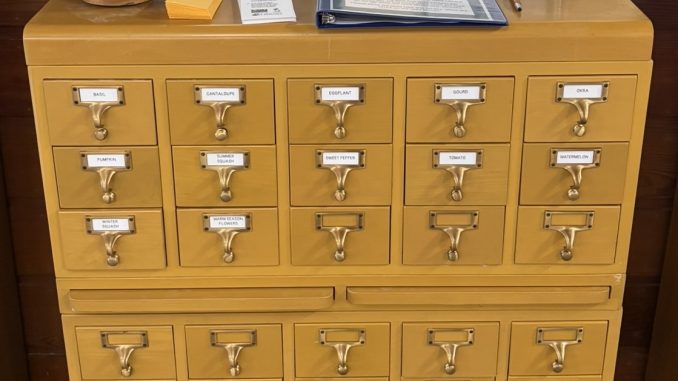
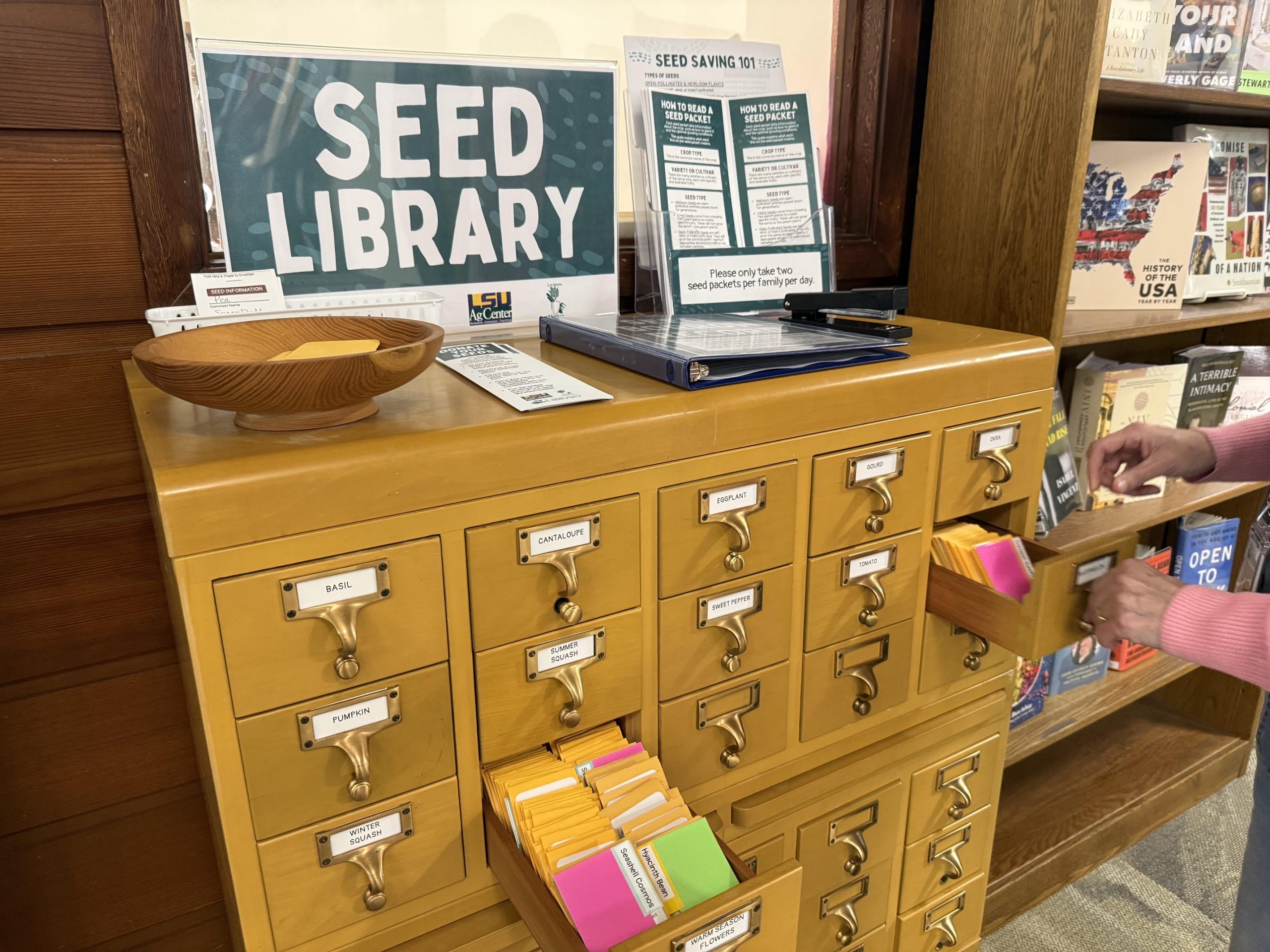
The St. Charles Parish Library recently launched a Seed Library at the West Regional Library in Luling, giving residents free access to seeds selected specifically for local growing conditions. The project, housed in a repurposed card catalog, is designed to promote gardening, sustainability and community sharing.
Maria Bilello, the library’s adult programming and outreach librarian, said Seed Libraries are becoming increasingly popular in public libraries and other spaces because they promote sustainability, gardening education and community sharing.
“We hope that our Seed Library supports both beginner and experienced gardeners and families in the St. Charles Parish community who are interested in trying something new or growing food at home,” she said.
The idea grew from a partnership with LSU AgCenter Horticulture Extension Agent Alyssa Tarrant, who helped launch the project and selected seeds based on the parish’s growing region and planting seasons. Available seeds will rotate throughout the year so that only varieties suitable for the current planting season are offered.
 Bilello served as the library’s project lead, researching best practices from other libraries. Staff members from the LSU AgCenter and volunteers with the River Region Master Gardeners packaged and labeled every seed packet available through the program.
Patrons may take up to two seed packets per family each day from the Seed Library. After selecting seeds, visitors are asked to complete a borrowing record so library staff can track inventory and identify popular varieties. Seeds are available only in person at the West Regional Library and cannot be placed on hold.
The library also hopes residents will help sustain the collection by saving seeds from successful crops and donating them back. Open-pollinated and heirloom seed donations are accepted at the West Regional Library, though GMO and patented seeds cannot be accepted.
Bilello said one of the biggest misconceptions about gardening is that it requires specialized knowledge, expensive tools or a large amount of space.
“Every seed packet provided at the Seed Library includes information about growing that plant, and Alyssa Tarrant created a guide with instructions on how to read it,” she said. “We want to empower our community to try gardening at home by offering free seeds and resources to help them succeed.”
Lauren Campo Pitz, assistant director of the library, noted that many vegetables and flowers can be grown in containers or raised beds.
“You do not need a huge yard to get into gardening,” she said.
In addition to providing seeds, the library offers books and educational resources on gardening, seed saving and sustainability at all six branches. This summer, the library is hosting several gardening-related programs in partnership with the LSU AgCenter and River Region Master Gardeners, including workshops on seed saving, growing herbs, creating wildflower seed bombs and planting vegetables.
The Seed Library launch also ties into the library’s 2026 summer reading theme, “Plant a Seed, Read!” Library officials said the collection will remain available beyond the summer and represents another way the library expands access to lifelong learning opportunities.
“In addition to exploring a new hobby and learning new skills, a goal of the Seed Library is to encourage sustainability and environmental stewardship,” Bilello said. “We hope that seed saving and sharing will strengthen community connections by patrons sharing successful local varieties with one another, reducing waste and promoting regenerative gardening practices.”