Many years ago, Inez Hymel sewed gowns for the Lylian Shop in New Orleans – her work was so popular and respected that the owners of the shop asked Hymel if she would move into apartment above the business. She declined, not wanting to leave her home in St. Charles Parish.
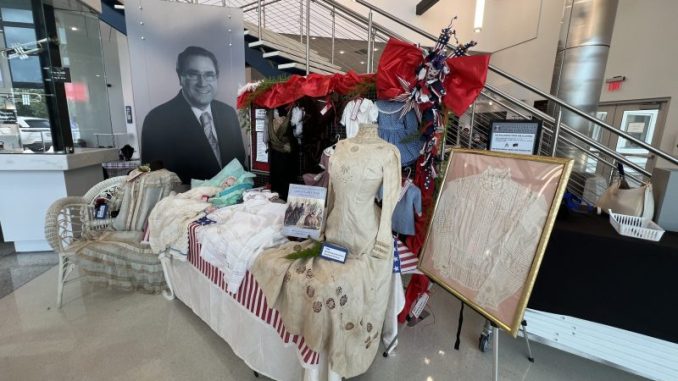
She was just one of a number of very talented St. Charles Parish seamstresses whose extraordinary craftsmanship made their creations highly sought after through the years. Many of those women were recognized and spotlighted for those abilities as part of a vintage clothing exhibit at the recent America 250 “We’ve Come a Long Way, Baby!” production put on by the St. Charles Women’s Club at the Lafon Performing Arts Center in Luling.
The event’s theme was aimed at highlighting 250 years of the evolution of women through history and fashion. The items on display at the clothing exhibit dated back to as early as the 1800s and all were made by seamstresses living in St. Charles Parish. Many local women sewed for couturier shops in the French Quarter.
 The exhibit was coordinated by Rita Carlson and decorated by Linda Malinovsky, both members of the Women’s Club. Carlson said her hope was that the visitors to the Lafon Center that night would not only admire the garments displayed, but remember the names of the women who made them.
A sign accompanying the exhibit recognizing seamstresses Bea Arnold, Geraldine Brady, Sabastine Byrd, Teela Zanor DiBuono, Doris Friloux Dempsey, Octavia Faucheux, Lula Haydel, Inez Hymel, Josepha Hymel, Corrine Keller, Lovinia Kinler, Dorothey Loupe, Jeanne Keller Madere, Earline Roux Mongrue, Betty Foret Petit, Emily Schexnaydre Pollet, Muriel Mongrue Pumphrey, Amy Roux, Eva Champagne Roux, Bella Savoie, Lelia Faucheux Tregre and Amire Troxler.
“I’m not really a stage type of person, but I’m a history person,” said Carlson, noting the 250th anniversary event’s stage show that night. “So, I suggested maybe we have some vintage clothing.”
The idea stemmed from a sewing exhibit held more than 30 years ago at Ormond Plantation. Nancy Wilson was a coordinator of that event and was instrumental in this one as well.
“She not only knew about the pieces of vintage clothing because she loves history too, but she knew the stories behind them,” said Carlson. “When I visited her to see her collection, she mentioned her mother had done this type of sewing as well. I asked if she knew of other women who had sewn for the shops – she knows all of these families, not only their married names but also their maiden names. She really knows her history.”
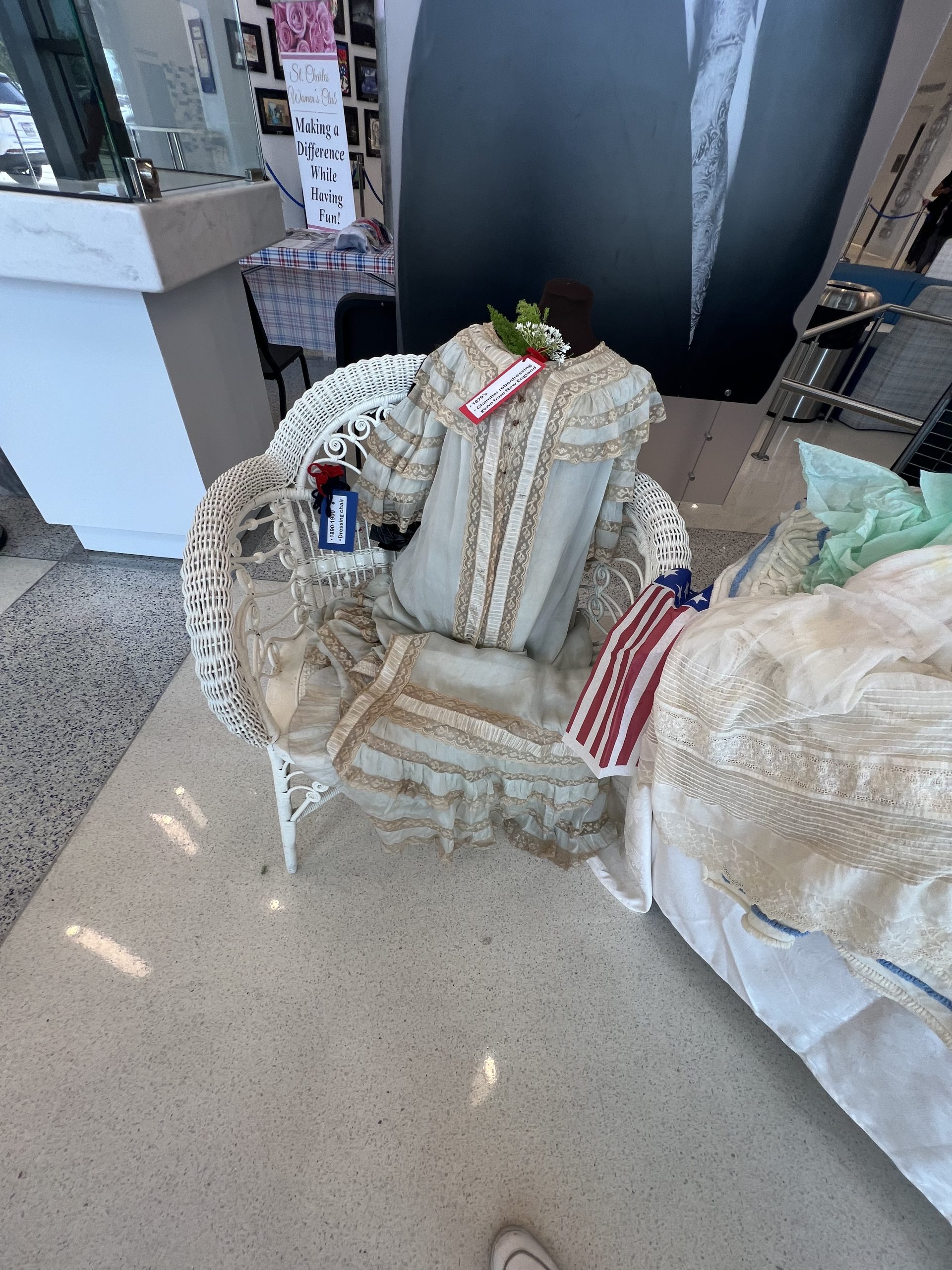
A christening gown on display was first worn by R.J. Vial in 1909 and was passed down and used for five generations of his branch of the Vial family. Another dress was made by Wilson’s mother Lelia Tregre. A dressing gown was estimated to have been made possibly as early as 1870. Two dresses made by Corrine Keller were approximated to have been made around 1920 – Keller designed, sewed and wore them, and made many others sold in New Orleans.
“Many of the women who sewed never actually went to the shops. The fabric and patterns were mailed to them and they completed the garments at home and mailed everything back,” said Carlson. “You have to remember – in the 1940s, 50s and 60s, Luling and Hahnville were considered a long way from New Orleans back then. People didn’t travel as much.”
Jeanne Keller Madere, Carlson believes, may have been an inspiration to several of the women on the list who began sewing professionally.
 “I think Jeanne may have been the connection,” said Carlson. “She was from here but she worked in the French Quarter, and when she needed skilled seamstresses she contacted people she knew back home. In those days a lot of women sewed, but this required expert sewing. I think it was probably a way for women to make a little extra money while staying at home.”
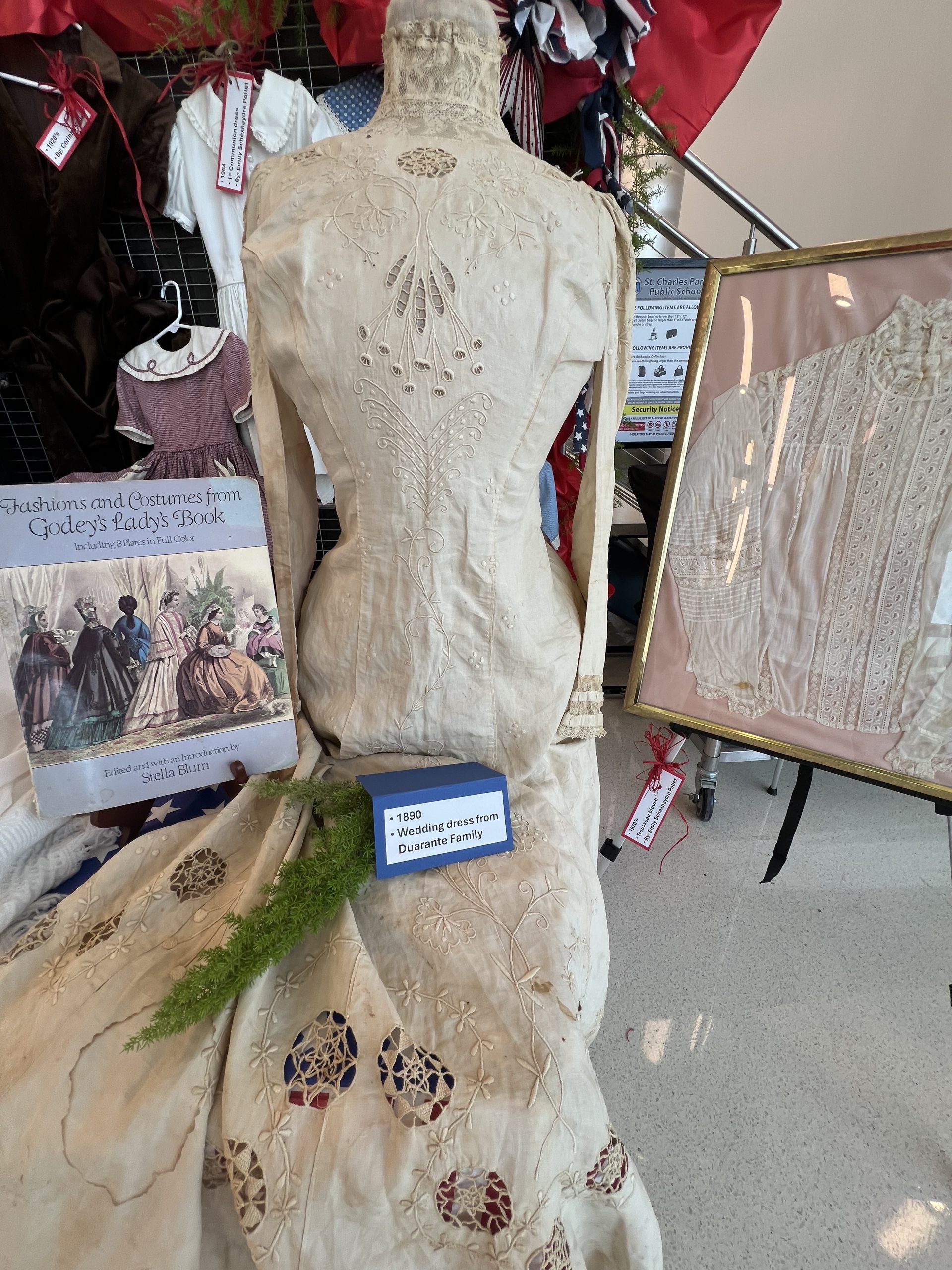
A wedding blouse displayed was made by Lynne Hymel’s grandmother, Emily Schexnaydre Pollet, as part of her trousseau in the late 1920s to 1930s.
“It was made from narrow strips of lace that were sewn together – it was just amazing to see,” Carlson said.
Carlson said the story behind the exhibit was truly centered on the women themselves.
“More than anything, it was the handwork that made these garments so special. The seams, the decorative stitching, the lacework – it was just beautiful. Who would think today of sewing together dozens of narrow strips of lace to create a blouse? We buy fabric by the yard now. People don’t make clothing that way anymore.”
She added that without people like Wilson, who holds a high appreciation for vintage clothing, many pieces like these could have been lost over the years.
“Instead, they’ve been preserved, and now they’re able to help tell the story of the women who made them and the families who treasured them,” Carlson said.
“That’s really what I hoped people would see – that these weren’t just old dresses, but they represent the women who created them, the craftsmanship they possessed and a part of St. Charles Parish history that’s worth remembering.”