Caleb Byrd recently celebrated his sixth birthday and opened his gifts – a few years ago, it was the gift of a lifetime that brought him here.
Today, Byrd can go to the beach with his parents and play in the sand. Jiu-jitsu, gymnastics and T-ball are among his hobbies. He loves going up to new people and making friends.
“He’s like a little politician,” said his mother, Jamie. “He’s walking down the hall at school and everybody knows him. He’s very extroverted.”
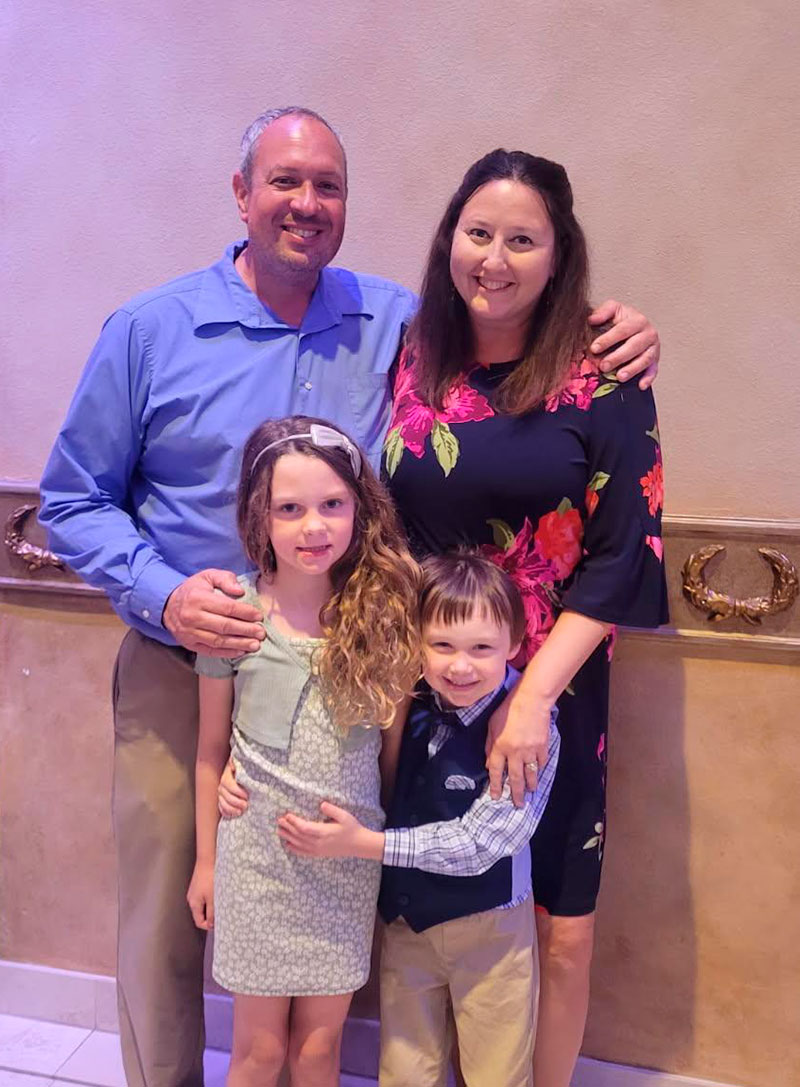
Jamie and husband Corey say their son seems to enjoy each and every day to the fullest. It’s all a contrast to the start of Byrd’s life, where isolation was a necessity and none of this was promised.
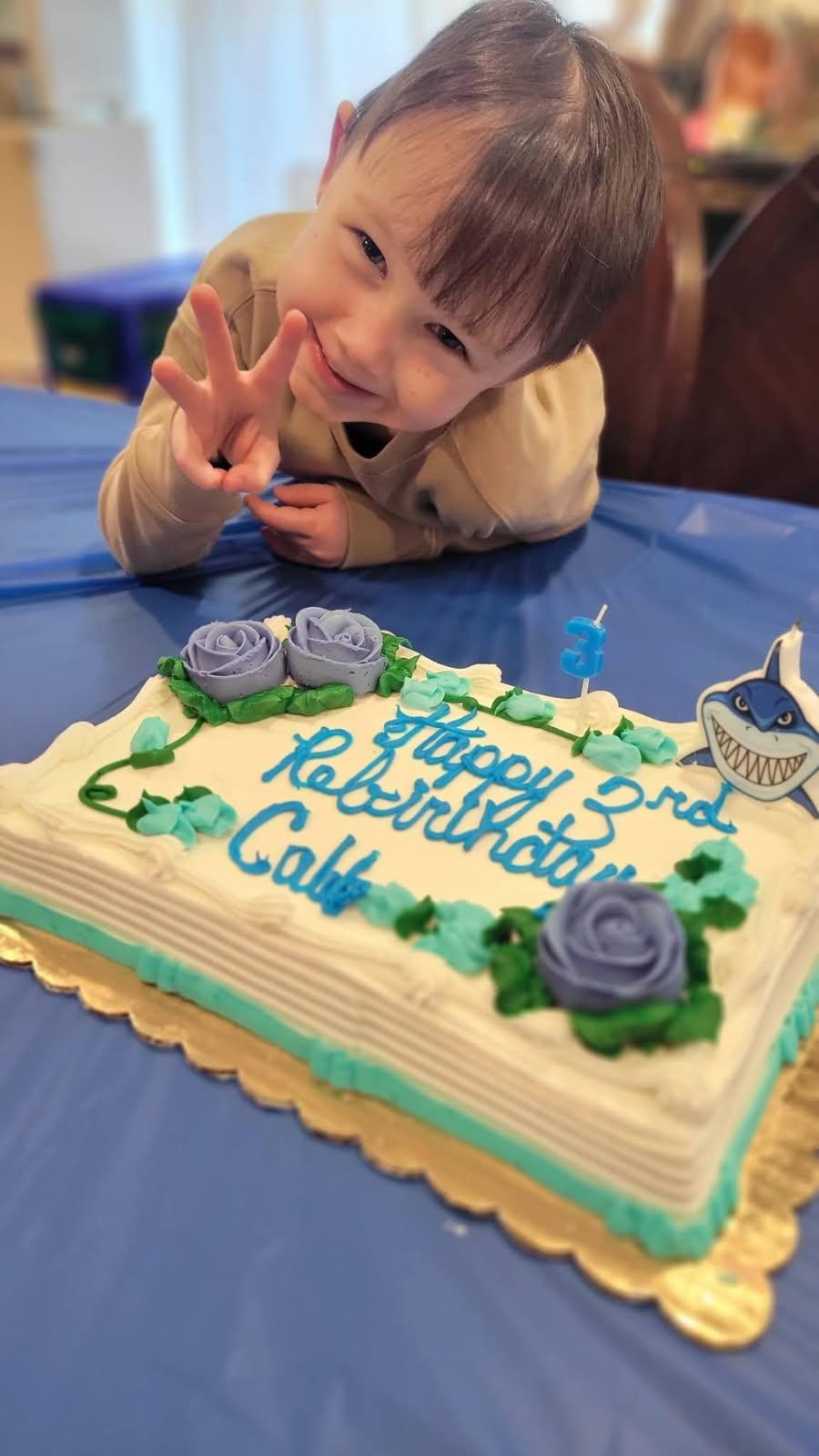 After Byrd was born, he was diagnosed with a very rare immunodeficiency disease called X-linked HyperIgM, which leaves patients highly susceptible to severe and opportunistic infections. It affects approximately two out of every 1,000,000 newborn boys. In Byrd’s case, it meant he would ultimately need a bone marrow transplant to save his life and cure him of the illness – without a transplant, it was estimated he would not live past age 20.
He went onto the bone marrow transplant list, a worldwide registry. It turns out, however, his hero wasn’t far away at all.
Aaron Michel lives just 45 minutes away from the Destrehan family – and works in St. Charles Parish as well. He made the decision to donate bone marrow to the then-2-year-old Byrd.
A friend and former co-worker of Jamie reached out believing she may have stumbled upon the identity of Byrd’s donor. Michel had made a Facebook post about being in Washington D.C. where he was about to donate bone marrow to save a 2-year-old boy. The name of the donor is not officially disclosed to the family until at least a year after a transplant.
 “I reached out to them and said, you guys don’t know who I am, but do you know what the child has, where the child was … and they said no we don’t, the only way you’d really know is we sent the child a stuffed animal and a book,” Jamie said.
That didn’t seem to be the case for Caleb – until about six weeks later during a follow-up visit. The nurse practitioner walked in with a box and said she had a gift from the donor.
“And we just stop and I’m like, ‘What?’” Jamie said. “And of course, I just started crying.”
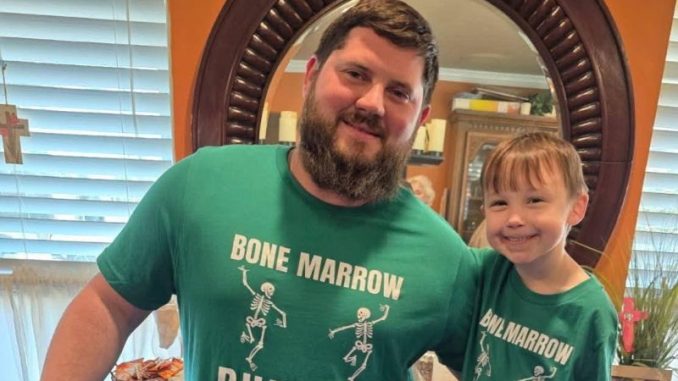
Since then, Michel and his family have become extended family for the Byrds. They celebrate Byrd’s “transplantiversary” together every year – Michel and Byrd wear matching shirts for the occasion, this year’s versions displaying “bone marrow buddies for life” on the front.
“It’s the greatest gift any human being could ever give another,” Corey said. “You gave our son the opportunity to live a normal life.”
They said Michel has told them many times than a thank you isn’t necessary, but the Byrds disagree with that notion.
“He says not to thank him, he’d have done this for anyone, but I will thank him every day for the rest of my life and it still won’t be enough,” Jamie said.
Added Corey, “It’s the most selfless act.”
Michel was a perfect donor match for Byrd.
“We feel so blessed. So many have to wait years for a donor,” Corey said.
Byrd’s symptoms became severe around August of 2021, when painful throat ulcers prevented him from eating, drinking, talking or walking normally.
For the next six-plus months, the Byrds searched for answers until he was ultimately diagnosed in February of 2022.
In an ironic twist, the COVID-19 pandemic may have brought a curtain of necessary protection for Byrd – lockdowns meant he simply wasn’t around others during his infancy, and potential exposure to life-endangering infection thus limited.
The Byrds relocated to Atlanta for seven months while Caleb underwent treatment under Dr. Shan Chandrakasan, who specializes in X-linked HyperIgM. Byrd endured chemotherapy, lost his hair and spent several months hospitalized. His older sister Kinsley didn’t recognize him initially.
He’s a much different child today, outgoing and energetic. He loves dinosaurs, singing, and wants to be a barber one day.
As for his parents, Corey and Jamie say they can’t completely consider themselves out of the woods just yet. While the transplant eliminated Byrd’s illness, his immune system has not fully reconstituted and he receives weekly injections to help protect him from serious illness.
“But when he was able to first go to school and be around friends and kids … it wasn’t a feeling of out the woods, but something of a sigh of relief,” said Corey.
But beyond that, he lives a normal life – one his parents dreamed and hoped possible for him, and one made possible by an incredibly selfless act.