
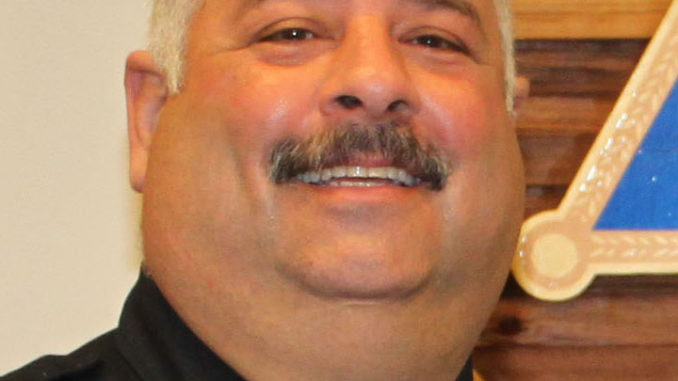
Years ago, Lt. George Breedy’s cousin was killed by a drunk driver. Now, Breedy is among the state leaders in DWI arrests and has helped the St. Charles Parish Sheriff’s Office institute a policy that uses warrants to force suspected drunk or drugged drivers into giving blood or urine to determine intoxication.
For his efforts, Breedy was named the St. Charles Parish Sheriff’s Office 2010 Deputy of the Year.
The Sheriff’s Office began the no refusal program during Memorial Day weekend last year. With the program, if a suspected drunk or drugged driver refuses to take a breathalyzer, officers may obtain a warrant that will allow them to draw blood, get a urine sample or force a breath test.
Arizona was the first state to initiate a blood-drawing program in 1995. At the time, the state had a breath test refusal rate of 17 percent. In 2007, that rate had dropped to 8.56 percent. Texas, who initiated the program in 2003 when the breath test refusal rate was 50 percent, has now seen that number drop below 20 percent.
The blood program also touts a 98 percent conviction rate.
St. Charles Parish was one of the first in Louisiana to start the no refusal program and is currently the only parish that uses it at all times. Other parishes may use the program on holidays or during specific hours.
Breedy brought the idea to the Sheriff’s Office administration after hearing about the program at a training class. Not only did the administration think it was a great idea, but the district attorney’s office and district judges went for it as well.
“It’s a tool that helps us make a better case,” Breedy said. “If I have a person whose driving is impaired, I can document it in detail, do a field sobriety test and smell alcohol. I can put that all together, but it’s not as strong a case as it is if I have a reading of a breath over the limit or blood alcohol over the limit.”
Breedy also happens to be one of 16 active drug recognition experts in the state. He has undergone extensive training to be able to identify, on appearance alone, the specific drug that is causing impairment.
“So unlike most of the warrants in other areas that allow officers to draw breath or blood, we did it so that the warrant allows us to also get urine,” Breedy said.
And how is someone forced into giving urine if they refuse?
“We do in fact have catheters and we have utilized catheters twice,” he said. “Some drugs metabolize in the blood and others metabolize in the urine so that’s why we sometimes need both.”
So far, Breedy said not one judge has refused to grant a warrant for the program.
While on the road, Breedy looks for the common signs of a drunk driver, including erratic lane changes, slowing down at green lights, weaving or driving with the head lights off.
“A lot of times, people who are distracted because they’re messing with their phones, messing with their radios or are really, really concentrating on the conversation they’re having exhibit symptoms much like a drunk driver. It’s not until we stop them that we know that,” Breedy said.
Breedy said that he can quickly tell if someone is intoxicated or not based on their actions. He can also tell if they are under the influence of drugs.
“With a lot of drugs, not just alcohol, you’re going to see slurred speech, poor coordination, a lack of concentration or profuse sweating in some drugs like stimulants,” he said.
And in some cases it’s even more obvious, especially if the smell of alcohol is prevalent.
“I had a person a couple of weeks ago who was stopped at a caution signal. A caution signal is not going to change, so he was stopped in the middle of Airline Highway,” Breedy said. “When I stopped him he had vomited all over himself and when I inquired about that he said he had done it an hour ago.”
Breedy said that the ratio of intoxicated drivers in St. Charles Parish is not bad compared to other areas, but that deputies have the time to actively patrol for DWIs.
“Whereas in other jurisdictions they are going from call to call to call,” he said. “So that contributes to our number of arrests. The administration has also supported the program and employees are following their lead.”
Most of the intoxicated driving arrests that Breedy makes occur after 11 p.m. However, they can occur much sooner.
“I’ve personally made arrests at 9 a.m. and at 3 p.m.,” he said. “Although people tend to go out drinking more in the evening hours, people who abuse substances do it at all hours of the day and night and then they tend to drive.”
And Breedy takes pride in taking those people off the street.
“I enjoy helping people, I enjoy taking drunks off the road and my primary assignment is narcotics so I enjoy taking drug offenders off the street,” he said. “But what I enjoy the most though is putting a case together and being able to present it and knowing I was right when the jury finds that person guilty and the judge sentences them to some time in jail.”
Breedy is a 22-year veteran of the Sheriff’s Office. He will be recognized by the Louisiana Highway Traffic Safety Commission this month for his 37 DWI arrests.
That is the most DWI arrests during 2010 in parishes with similar populations in Louisiana.
Breedy said that he has such a high DWI arrest rate because of his years of experience and the extensive training that he has gone through.
“The one that gave me the most training is the drug recognition expert class, which is the most difficult class I have been through as a police officer. I had less of a challenge with most of my college courses,” Breedy said.
The class took 80 hours to complete and then Breedy had to travel to Arizona and evaluate people under the influence of multiple drugs.
“Each student has to do 12 evaluations and your accuracy rate has to be up there,” he said. “If the instructors don’t see it then you don’t go through. It doesn’t matter if you’ve passed all the other (tests).”
In addition to his drug recognition training, Breedy is an instructor in classes that teach officers how to administer the intoxilyzer breath tests as well as the standardized field sobriety test.
Be the first to comment