
Disinfectants and flushing of St. Charles system increased
While St. Charles Parish water has not been tested for the “brain-eating amoeba” found in four Louisiana parishes, precautions are being taken to make it an unlikely survivor in the local supply.
“I have no reason to suspect we have issues because we meet regulations, said parish Waterworks Director Robbie Brou. The parasite, Naegleria fowleri, has been found in four water systems in Louisiana. Aided by advanced sampling technologies, the Centers for Disease Control and Prevention (CDC) found the amoeba in DeSoto, St. Bernard, Ascension and St. John parishes.
The state Department of Health and Hospitals (DHH) confirmed the amoeba has caused deaths in Louisiana.
The amoeba is typically harmless if ingested because it can’t survive stomach acid, but it can cause death if it can bypass that route by gaining direct access to the brain such as through the nose. It consumes brain cells while reproducing, causing fatal brain swelling and infection or the disease known as primary amoebic meningoencephalitis.
Based on CDC findings, Louisiana has required all parishes use chlorine- and ammonia-based disinfectant at a minimum chlorine level of 0.5 parts per million, which is a proven killer of the amoeba. DHH Medical Director Jimmy Guidry said they are telling water systems to check chlorine and increase it.
This is exactly what Brou said they are doing in St. Charles Parish to ensure its 23,000 water customers don’t have to worry about a brain-eating amoeba in their water.
Low chlorine levels were reported in parishes with documented cases of N.fowleri deaths.
Last month, DHH instated a 60-day “chlorine burn” in St. Bernard Parish.
Brou said DHH implemented these statewide measures two years ago by emergency rule, expanding the process to respond to the health threat that includes upping chlorine testing by 50 percent to more broadly test the water system. Also, they call for better disinfection with chlorine or chloramines (disinfectants commonly formed by combining ammonia and chlorine for a longer lasting treatment).
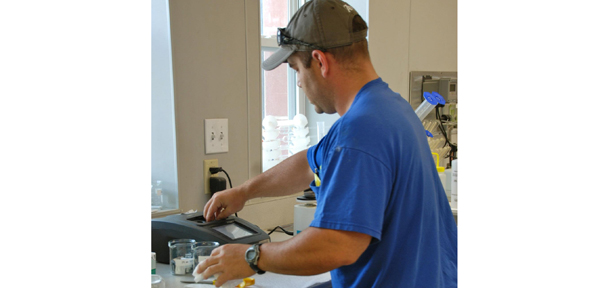
St. Charles Parish water has not been tested for the amoeba, but Brou said they have gone “above and beyond” regulations in testing chlorine levels and flushing the system of “dead water” with low or no chlorine since the amoeba was detected in St. Bernard Parish in June. The system has been fitted with automatic and timed flushing in areas, as well as manual flushing of water.
Guidry said they don’t notify systems when they’ll be tested, but he did say the St. Charles Parish water system is not listed for testing this year because it’s not a high-risk system.
DHH, which only hired staff to do the testing a year ago, has remained focused on parishes with confirmed N.fowleri deaths (two in 2011 and a child in 2013) related to drinking water.
“We’re the only state looking for it,” Guidry said, a move triggered by these deaths. Louisiana is on the cutting edge in conducting the testing, which was developed by the CDC and conducted in Louisiana labs. “We are looking for it and letting people know when we find it, but it’s not a common infection from drinking water.”
Brou agreed.
As a member of the 17-member Louisiana Water System Design, Operation and Maintenance Committee, he knows water systems.The amoeba thrives in sediment in storage tanks, water towers, waterlines and distribution lines, he said.
Intensifying disinfectants along with routinely testing sections of the 450 miles of waterlines in St. Charles Parish have shown no problems. Although the system encompasses two districts (East and West banks), they are interconnected.
The amoeba also thrives in temperatures exceeding 77 degrees. St. Charles Parish lines are underground so the water is generally cooler, but July’s scorching temperatures has pushed that average temperature in the low 80s, which is reported to DHH monthly.
“The amoeba is new to water systems, but it has been in fresh water bodies throughout the Southeast,” Brou said. “If you swam in a waterway in the Southeast you have been exposed to it.It’s an emerging pathogen and it’s still not regulated by the EPA [U.S. Environmental Protection Agency]. It’s scary because, by the time they know you have it, it is post mortem.”



Be the first to comment