
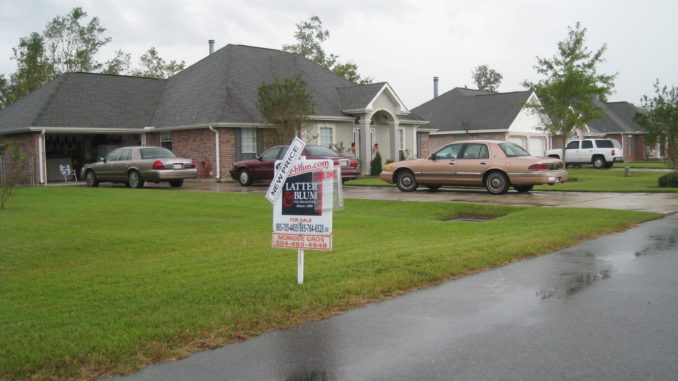
Only those with large stash of cash can afford to buy homes, says developer
The President and CEO of First American Bank, which has five branches in St. Charles Parish, believes the bailout of the U.S. financial system won’t impact his local bank.
Bank president Frank Bourgeois says the problems began with larger national lenders and the decline of the housing market.
“The financial problems are with larger financial institutions like Washington Mutual and Wachovia,” Bourgeois said. “Investors and investment houses will feel the impacts and mortgage lenders that need to recoup their losses from the declines in the real estate market will feel the affects.”
However, one developer, who once had access to money through lines of credit to build houses, is worried that things won’t turn around soon enough, even with the signed $700 billion bailout plan.
Ron Brown, Jr., of Deloe Home Builders in St. Charles Parish, says banks just aren’t making loans like they use to. He believes it’s because of the failures that have occurred with giant mortgage lenders.
“There’s nobody loaning any money, at least that’s the word on the street that I’ve been hearing,” Brown said. “People who want to purchase anything can’t get loans from the banks, so it’s a bad situation right now.”
Brown feels fortunate that he sold all of his newly constructed, pre-built homes before the housing market plummeted and lenders began placing strict guidelines on their policies and denying credit applications that were once acceptable before the decline in the market.
“I got rid of everything I had that was pre-built,” he said. “And now I won’t build anyone a new house, because I can’t. Banks just aren’t lending any money.”
Brown says it’s common sense and everyone will be impacted by this decision at some point.
“No matter how you feel about the bailout, the fact is that credit is completely frozen in place and it’ll have an affect on you and everyone you know until it gets fixed,” he said. “If you can come up with half of your own money, the banks might be willing to hold the loan, but coming up with $100,000 on a $200,000 loan is a lot of money considering the current economic conditions.”
Brown says he can’t believe it’s gotten to this point.
“I’ve been in the (homebuilding) business for more than 13 years,” he said. “I still can’t believe it’s gotten this bad and what makes it worse is no one can say for sure when the economy will turn around.”
Bourgeois recommends that residents place their money in banks that are FDIC or federally insured.
“This guarantees that your money is insured and covered no matter what happens,” he said. “Your money is protected dollar for dollar by the federal government.”
A summit in New Orleans, with local banking leaders from major chains like Whitney Bank and Capital One, was held last week to discuss the possible impacts of the bailout.
“The commercial banking industry is sound in Louisiana,” a spokesman from Capital One Bank in Luling said. “But we’re not being as flexible when it comes to lending practices.”
Wells Fargo, the second largest mortgage lender in the housing market, purchased all of Wachovia’s home loans this month, a move that costs the company $15 billion.
“It’s happening everywhere,” Brown said. “Just look at the news and you’ll see that we’re all feeling it. If lenders don’t lend money then buyers can’t buy. It’s as simple as that.”



Be the first to comment