
Little relief in sight, county agent says
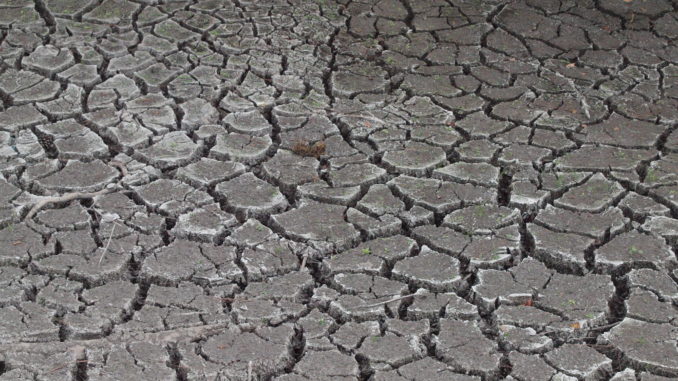
Drought conditions are reaching a critical point in St. Charles Parish and residents need to take care to make sure their land is protected.
According to the National Weather Service, the parish has been experiencing severe to extreme drought conditions for months.
Areas from Killona to Hahnville and Montz to eastern Destrehan are under an extreme drought, which can cause major damage to vegetation and loss of crops as well as pose an extreme fire risk. St. Rose, Ama, Luling, Boutte and Bayou Gauche are under a severe drought which means a very high fire risk and a threat to plants. Des Allemands and Paradis are right on the line between extreme and severe drought conditions.
Rene Schmit, LSU AgCenter county agent, said that recurrent droughts have become more common in the past 10 years, noting that this is the fourth drought in St. Charles in a decade.
“What I’m hearing is that there is little or limited relief in sight in the next month or so, but that’s always changing,” Schmit said. “In south Louisiana, we typically refer to July as our monsoon season. During other droughts, we generally got relief in July when the rains come.
“All we can do is keep our fingers crossed and hope that we have that reoccurrence and we can still call July our monsoon season. The relief we do get, as unwanted as it may be, also may come from our tropical depressions.”
Renee Simpson, public information officer for the parish, said that residents do not need to worry about water supply during the dry conditions.
“The drought won’t affect the parish’s water supply because our source is the Mississippi River,” Simpson said.
But Schmit said that residents should be concerned about their lawns and gardens.
“We’re basically getting to that situation of a void of moisture in the soil,” Schmit said. “Even though we’ve had some minimal relief from periodic rain, we just haven’t had enough moisture to be able to provide a relief in terms of favorability to root systems, as well as topical moisture.”
Schmit said that homeowners should keep a close watch on flowers, grass and vegetable gardens this summer.
“Provide the moisture on a regular basis as best you can, which may mean watering lawns and landscape beds every three days at minimum and watering vegetable gardens every two days,” he said.
He said that large trees are not as much of a concern because they will soak up any moisture before other plants, but small fruit or shade trees should also be regularly watered.
“Large aged trees have a diverse root system so nothing can compete with the root systems of large trees – you can water forever and never provide enough to the plants around these trees,” he said.
Schmit said the best way to conserve water and still provide adequate moisture for plants is to water as early as possible in the morning so that the water does not evaporate during the day due to heavy winds or tremendous heat.
Schmit said that residents who have large trees near their homes should not be too concerned with the limbs becoming brittle and dry and breaking off.
“For the most part, trees are going to fair better than other plants unless the root system is very shallow and it’s a newly planted tree that does not receive water on a regular basis,” he said.
Schmit said that the hot, dry weather makes for bad planting and gardeners should hold off on adding to their yard or flower beds.
“If any plantings are done during the summertime…it becomes a tremendous task to be able to maintain a proper moisture level,” he said. “Your chances of success are greatly limited, especially in this drought situation.”
Schmit said that residents should also be careful when spending time outside during the hot, dry conditions.
“You need to be able to drink fluids on a regular basis about every 20 minutes when temperatures are above 90 degrees and you’re outdoors for a long period of time,” he said.



Be the first to comment