
Misdiagnosis lets amoeba feast on organs
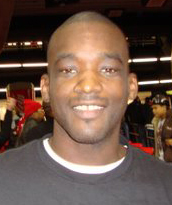
Three years ago, Destrehan native Randy Butler Jr. was working in Africa when he was bitten by what he believes was an ant or spider. The bug infected Randy with an amoeba – the same parasite that killed one Louisiana man earlier this year. The amoeba wreaked havoc on his body, causing him to need a liver transplant and kidney dialysis.
Now his family is trying to help raise money for his recovery and past and future medical expenses by holding fundraisers locally. Randy’s sister, Melissa Butler, held a “Party with a Purpose” last weekend that raised $1,800 for the cause. She plans to host a fundraiser each month, including a fish fry lunch, bus ride to local casinos and a penny drive.
Randy, 36, was working for a software company on a ship off the coast of Nigeria when the bug bit him on the back of his head while he slept.
Once he returned to the states, he had flu-like symptoms on and off for more than a year along with a rash. He lost 70 pounds and doctors could not give him any answers.
“Doctors kept telling him it was dermatitis or eczema or an allergic reaction,” Melissa said. “Eventually he ended up losing his job from being sick so often.”
Randy’s home went into foreclosure because of his medical bills and he had to move back to his parents’ home in Destrehan. Once in Louisiana, he began seeing doctors at Touro and Tulane hospitals.
“They initially diagnosed him with cirrhosis of the liver, not knowing or realizing how the liver got damaged, just that it was damaged,” Melissa said.
From there, Melissa said that doctors began grabbing at straws to diagnose her brother. She said that Randy saw doctors in Houston and New Orleans, and was misdiagnosed with a number of other ailments including leukemia, hepatitis C and lymphoma.
When Randy started having internal bleeding in his stomach, he looked online and found a doctor in Atlanta specializing in foreign infectious diseases.
He traveled to Piedmont Transplant Institute in Georgia where doctors determined he had none of the aforementioned afflictions, but instead had contracted an amoeba parasite that went through his blood stream, severely damaging his nervous system, liver and kidneys. They said he needed a liver transplant immediately.
“When he started the anti-parasitic medicine, it basically killed his liver off and that’s how he ended up needing the transplant,” Melissa said.
In October, the hospital found a matching donor for Randy’s liver transplant and he had the surgery. But a week later his body rejected the liver.
“The transplant liver was making him sicker; he was going into renal and heart failure,” Melissa said.
To remove the rejected liver, doctors had to put Randy into a medically induced coma where he lived on life support for two days with no liver.
In a rare miracle, doctors were able to find multiple viable liver options for Randy in just a few short days.
“People are at the top of the list for weeks or months before they find a match and they were able to find three for Randy within a month’s time,” Melissa said. “Needless to say, it has been a roller coaster of emotions.”
Now Randy is recovering in Atlanta, where his parents temporarily moved and rented a home to help him get well. He was released from the hospital last week, but his medical care is far from over.
He has a year of post-op care ahead of him, including check-ups and tests every Monday, Wednesday and Friday and kidney dialysis on Tuesday, Thursday and Saturday each week. He will also have to take immunosuppressant, or anti-rejection, medications for his new liver for the rest of his life.
According to the Georgia Transplant Foundation, a liver transplant costs more than half a million dollars, while the anti-rejection medications will cost Randy more than $30,000 each year. That is in addition to what he already owes for medical bills leading up to the transplant and hospital or doctor visits to come. Melissa said that half of the surgical costs and both pre- and post-op medications are not covered by Randy’s insurance.
Those wishing to help the Butler family with Randy’s medical costs can donate to the “Randolph Butler Jr. Transplant Fund” at any Capitol One or Regions Bank. Donations can also be sent to the fund at P.O. Box 1071, Destrehan LA 70047.


Be the first to comment