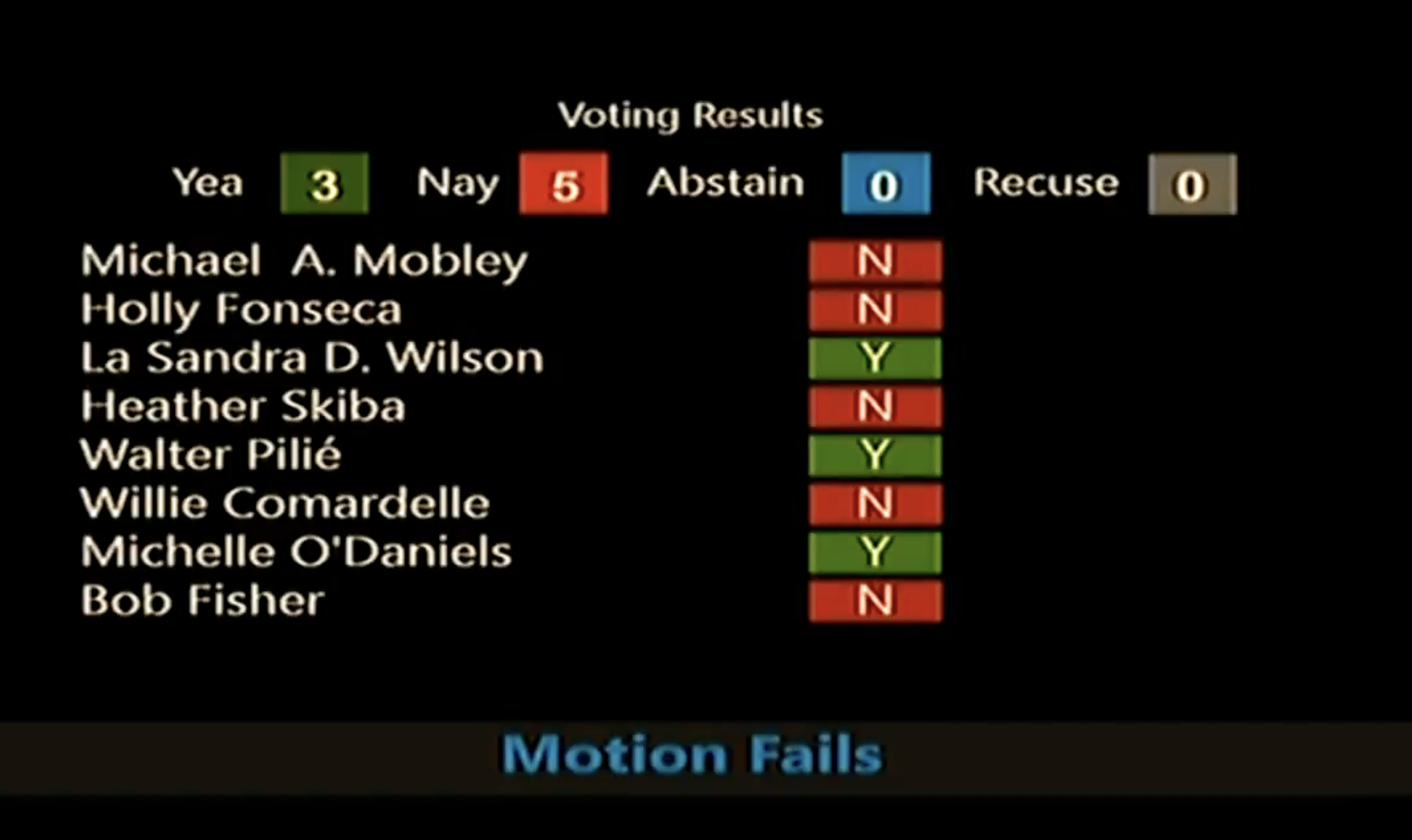
After a lively, hourlong debate on Monday, the parish council voted 5-3 against a moratorium on new data centers for eight months, or until the parish enacted specific data center regulations.
Council members Michael Mobley, Holly Fonseca, Heather Skiba, Willie Comardelle and Bob Fisher voted against the moratorium.
Fisher said he could not support a moratorium that says St. Charles Parish is closed for business.
Fonseca agreed, arguing that the moratorium would send the wrong message to industry.
“Think carefully about the message you are sending,” Fonseca said. “It’s a very serious message. Our parish has welcomed industry for many years. I am concerned about the fear that has been unnecessarily instilled in our residents.”
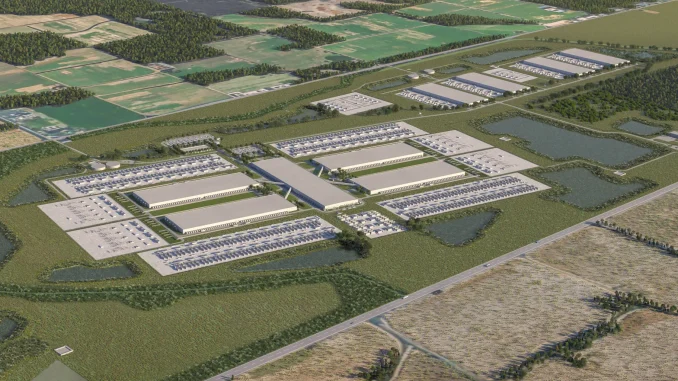
Data centers have become a growing topic of discussion nationwide as tech companies like Meta and Google build hyperscale facilities to support artificial intelligence. These large-scale centers require vast amounts of electricity and water to power densely packed servers and keep them cool around the clock. Although the state legislature has welcomed data centers with new tax incentives, critics question how communities will absorb the economic and infrastructure demands once large data centers move in.
Council members Michelle O’Daniels, LaSandra Wilson and Walter Piliè voted to approve the ordinance. They argued a moratorium was needed to give the parish time to regulate not only the location and size of data centers, but their water and energy consumption and their noise levels.
“I am here to represent the people,” O’Daniels said. “Until these regulations are in place then I am not in favor of just leaving an open gap with no regulations on the data centers. This is a protective measure while we are completely exposed with no regulations.”
O’Daniels said the moratorium was not about messaging.
“Maybe we don’t like the optics, or industry doesn’t like the word ‘moratorium,’” she said. “My priority is my residents and my residents deserve protection.”
Piliè said more work needs to be done to better regulate data centers.

“I really believe this is being rushed,” he said. “I have probably little sympathy for the people who are promoting going forward with this without having the proper work done.”
Multiple residents spoke in favor of the moratorium.
Joseph Coco of Destrehan argued that AI data centers create little local employment compared to petrochemical companies and they consume water and power at an industrial scale.
“An eight-month moratorium pause would give the parish time to study what other jurisdictions have done and write regulations that reflect what ‘data center’ actually means in 2026,” Coco said.
Parish resident Joey Edwards, who owns a home near Richland Parish, said Meta’s 2,250-acre center there has been a disaster for residents.
“That data center was forced on that community and I don’t want to see that happen here,” Edwards said during the council meeting. “This is very important to this parish. From a proactive approach, this is the citizens standing up, being proactive, saying, ‘we don’t want this.’”
But Parish President Matthew Jewell stressed that the parish was not a candidate for large-scale AI data centers like the one in Richland.
“The only thing that Richland Parish and St. Charles Parish have in common is that they’re both in Louisiana and humans live there,” Jewell said during Monday’s legislative meeting. “We’re sitting here talking about the big data centers. And again, based on our geographic location and our land constraints, we’re not a candidate for the Meta data center.”
Jewell also argued that large AI data centers would automatically fall under M-2, or heavy manufacturing and industry zoning, because of the acreage, resources and equipment required. He stressed that smaller data centers for things like cloud storage have been around for decades and do not require the same energy and water demands as newer AI facilities.
The issue of data centers will return to the council on May 18, when it considers an ordinance introduced by Jewell that addresses zoning of data centers. Jewell argued the proposal was pragmatic and protected residents.
After reviewing the proposal, however, Piliè said the ordinance did not have firm definitions of large and small data centers, among other issues.
“If you think you are going to pull this off in five weeks, you are delusional,” Piliè said in the council meeting.