

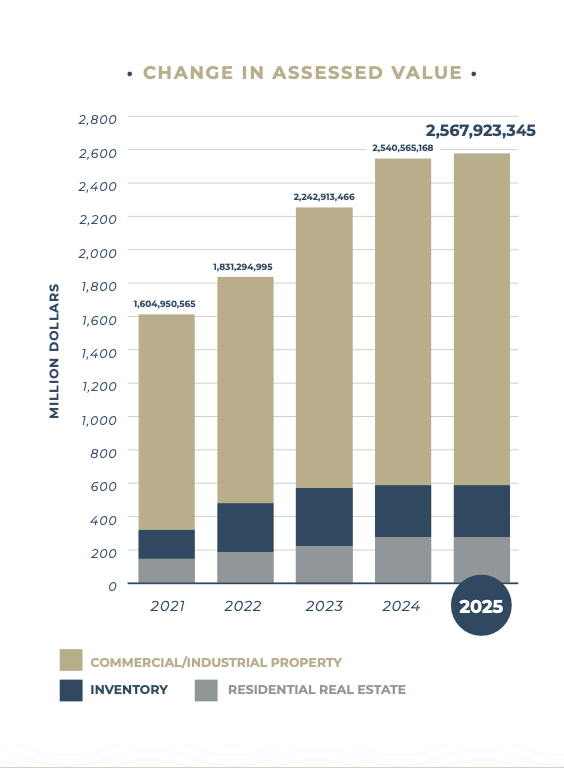
St. Charles Parish’s total taxable property value increased by one percent in 2025 to about $2.57 billion, according to the St. Charles Parish Assessor’s Office annual report.
That growth was slower than in recent years. The parish’s tax roll increased by more than 13 percent from 2023 to 2024, after rising roughly 22 percent from 2022 to 2023.
St. Charles Parish Assessor Tab Troxler said the parish saw a significant rise in the tax roll over the last five years, with taxable assessed value increasing by nearly $1 billion.
“There’s been significant growth in the tax roll,” Troxler said. “But what we’re seeing right now is that growth is not really sustaining itself. We do think there will be continued growth, but right now we’re seeing headwinds.”
 The parish generated about $259 million in property taxes – about $1 million less than in 2024 – as various taxing authorities in the parish cut millage rates.
Troxler noted the parish has one of the lowest millage rates in the area. The average millage rate is now 15 percent lower than its 2019 peak and is at its lowest level since 1992.
The report notes several millages will come up for renewal in the coming years, including some school, recreation and public service millages. Voters will decide whether to renew millages for the school district and hospital district this Saturday.
Proposition 1 on the ballot would renew the millage rate at a maximum rate of 39 for the maintenance and operation of schools through 2037. It would generate around $100 million per year. Proposition 2 on the ballot asks residents to renew the district’s construction and facility improvements at a maximum rate of 4.92 mills through 2037. It would generate a little more than $12 million each year.
In 2025, the maintenance and operation millage rate for parish public schools was 33.92. The construction and facility improvement millage was 4.16, according to the report.
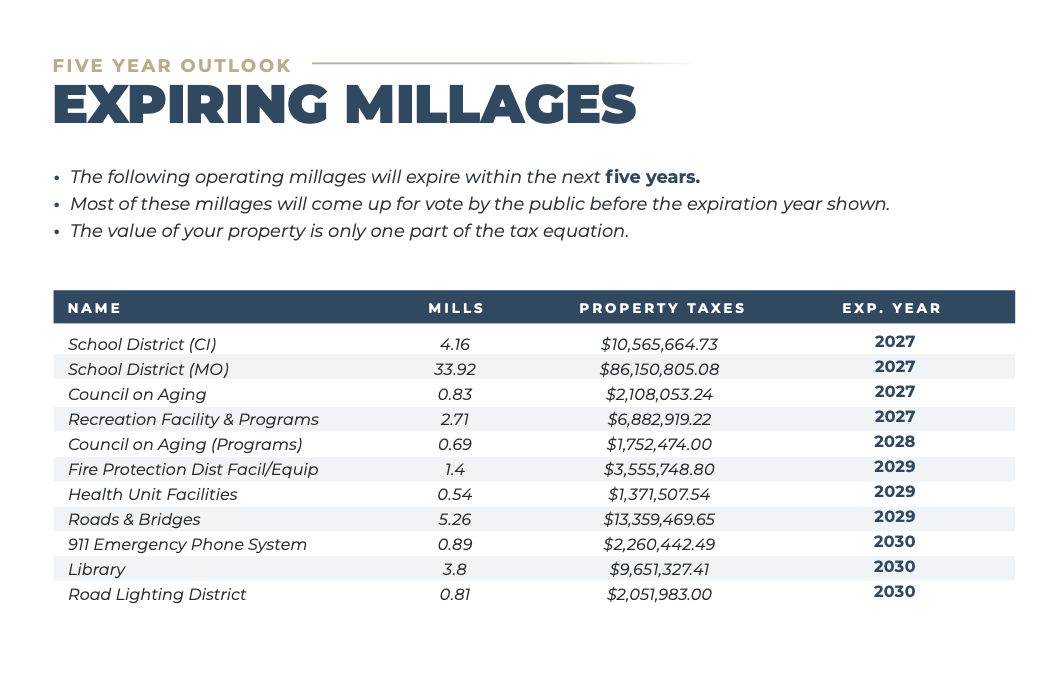 Parish public schools continue to receive the largest share of property tax revenue. Education-related millages account for 46 percent of the parish’s property tax collections, followed by public services at 26 percent and law enforcement at 20 percent.
Troxler encouraged residents to view the report before voting.
“The report is something that I have put forth since I’ve been the assessor for the purposes of transparency,” he said. “It provides answers to most questions that people ask. It shows where the property tax money is going and who gets it.”
According to the report, industrial, commercial, business and utility properties account for 89 percent of taxable value, while residential property makes up just 11 percent.
“That’s another big takeaway,” Troxler said of the report. “You won’t find that ratio almost anywhere. It is a highly unusual ratio where that accounts for 89 percent of the tax roll.”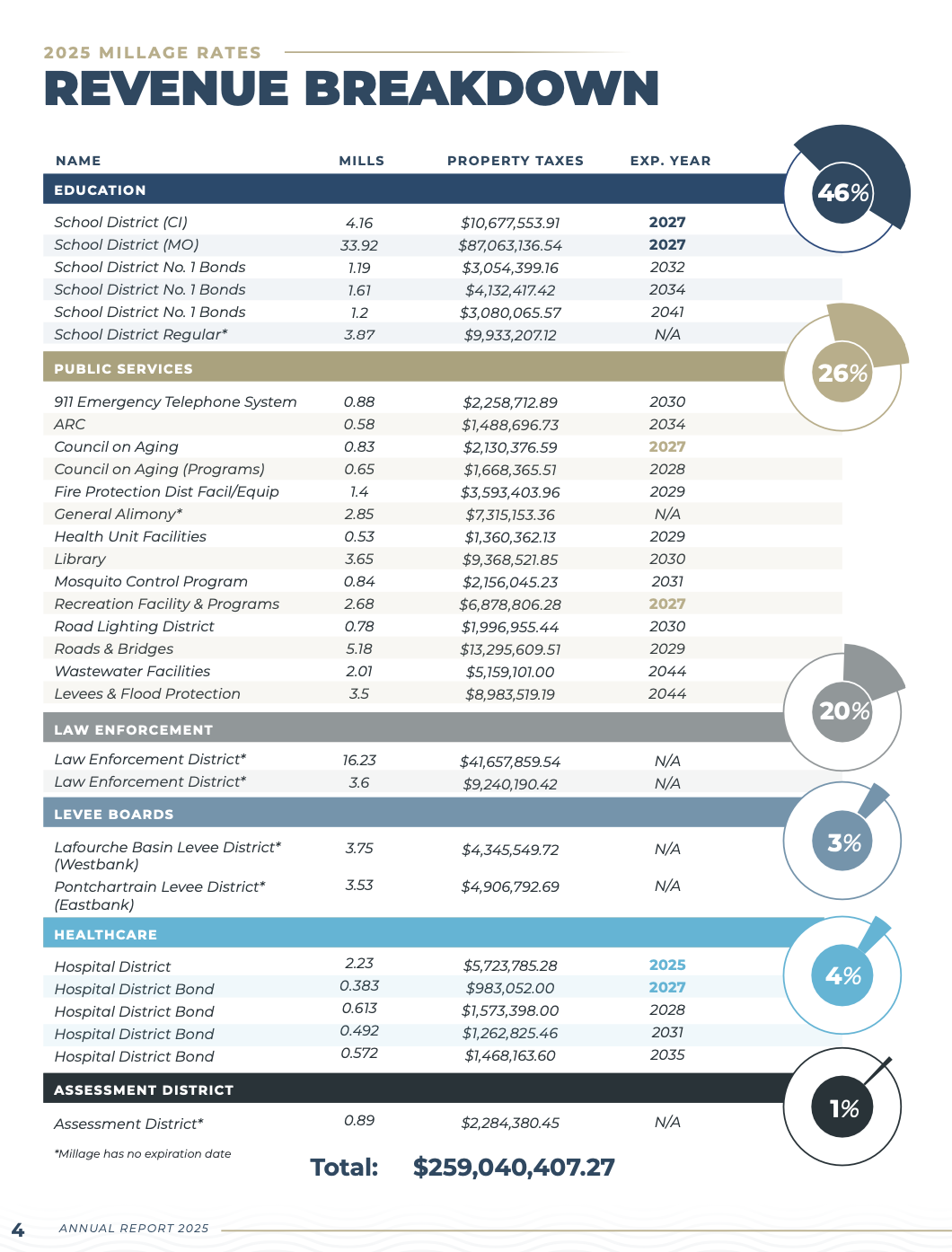
In 2025, about 18 percent of the parish’s assessed value was exempt from taxation through the state’s Industrial Tax Exemption Program. The ITEP allows manufacturers to receive partial property tax exemptions on some projects, such as new facilities, expansions or major capital improvements, for an initial five-year term, with the option to renew for another five years if approved.
Looking ahead, the report highlighted a proposed statewide constitutional amendment voters will consider in November that would increase income eligibility for Louisiana’s homestead assessment freeze from $102,700 to $150,000, potentially expanding tax protections for more senior and eligible homeowners.
The local housing market remained relatively stable in 2025. The assessor’s office recorded 89 new residential constructions parishwide, while the median time for homes to sell increased to 37 days. The parishwide median home sale price reached $270,000, compared with a median assessed value of $234,100.